
Climate change isn’t just about rising or receding seas and extreme weather. It’s also changing which diseases can reach us and where.
As Europe gets warmer, mosquitoes, ticks, and sandflies are spreading into areas where they were not commonly seen before. These insects can carry diseases like dengue, West Nile virus, and Lyme disease. The IDAlert project is tracking these risks and helping governments and health services prepare.
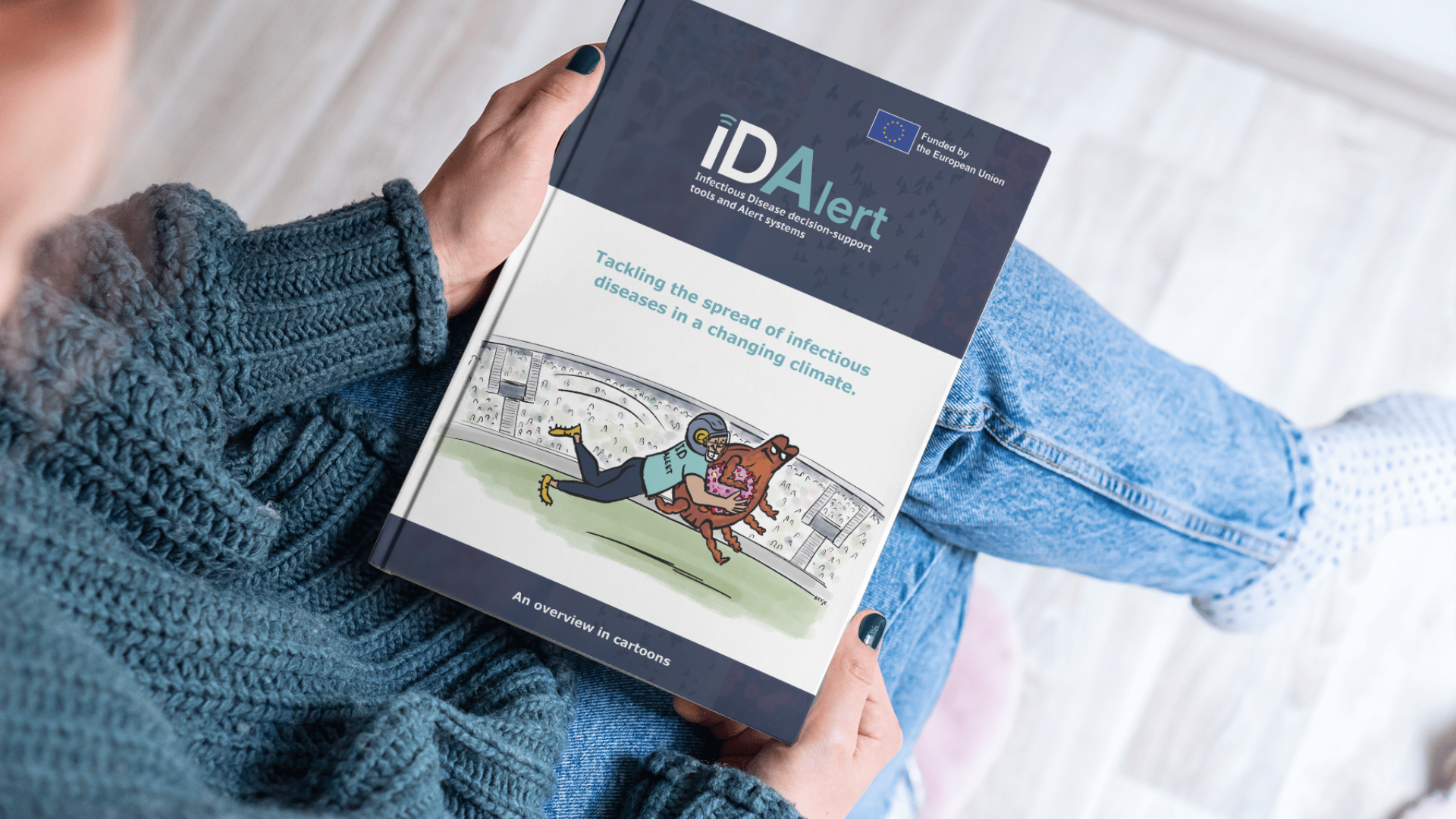
Research reports only go so far. So we tried something different: a cartoon book to make our research and its findings more accessible and relatable.
The book, released in February 2026, was illustrated and written by artist Betje Ton. It is joint effort by the IDAlert Coordinator and its consortium partners, and led by our partners Tilly Alcayna and Adwoa Amankona from the Red Cross Climate Centre. It captures the work of 19 research organisations across 9 countries into a colourful, accessible overview, told largely from the perspective of the mosquitoes, ticks, and sandflies themselves.
Why cartoons?
Science can be hard to connect with, especially when the topic feels distant or technical. Cartoons break down that barrier. Illustrator Betje Ton brought the research to life through the eyes of the insects themselves: a mosquito lounging in a warm puddle, ticks celebrating their new reporting app, a sandfly checking climate forecasts before deciding where to travel next.
Humour makes the message understandable and stick in people’s minds.
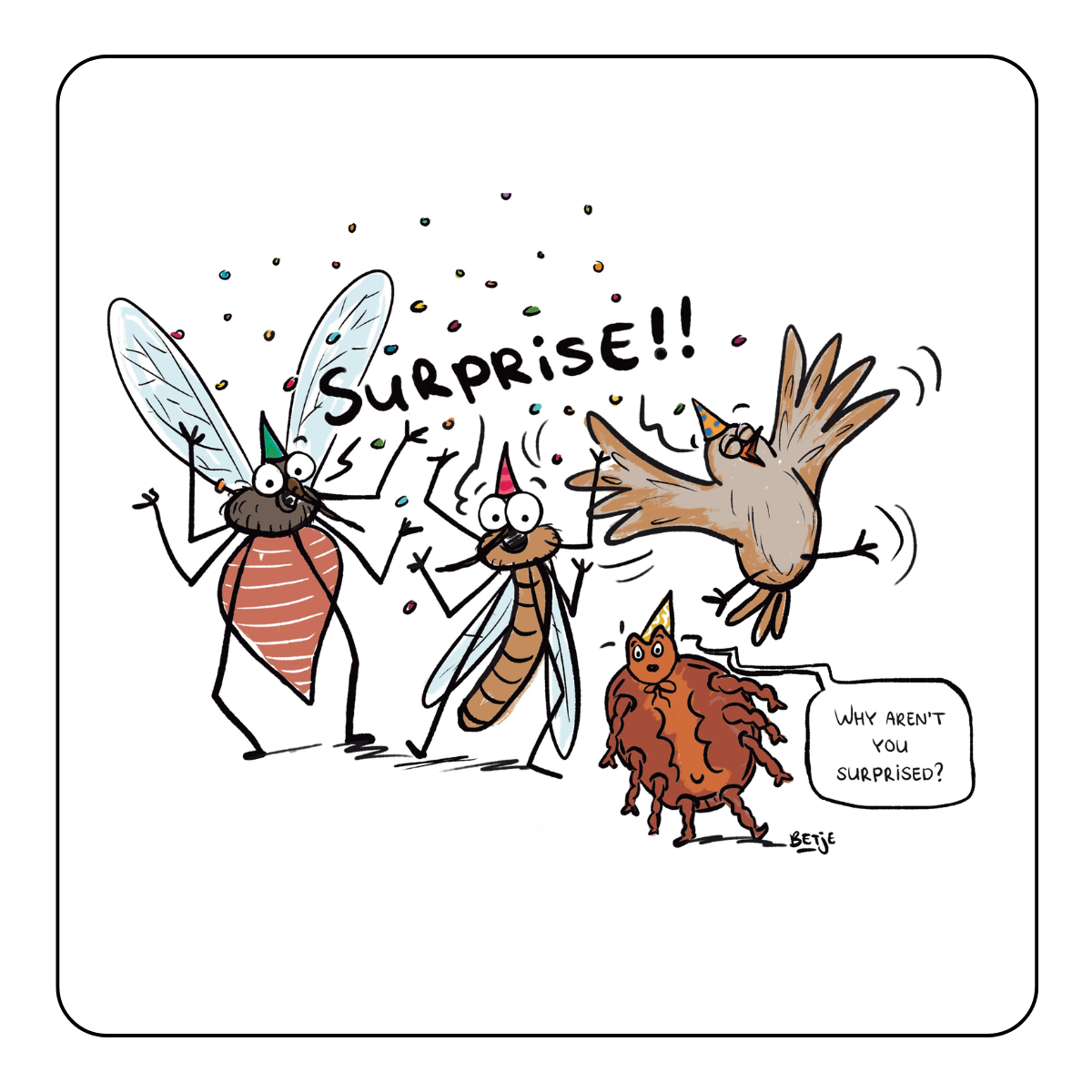

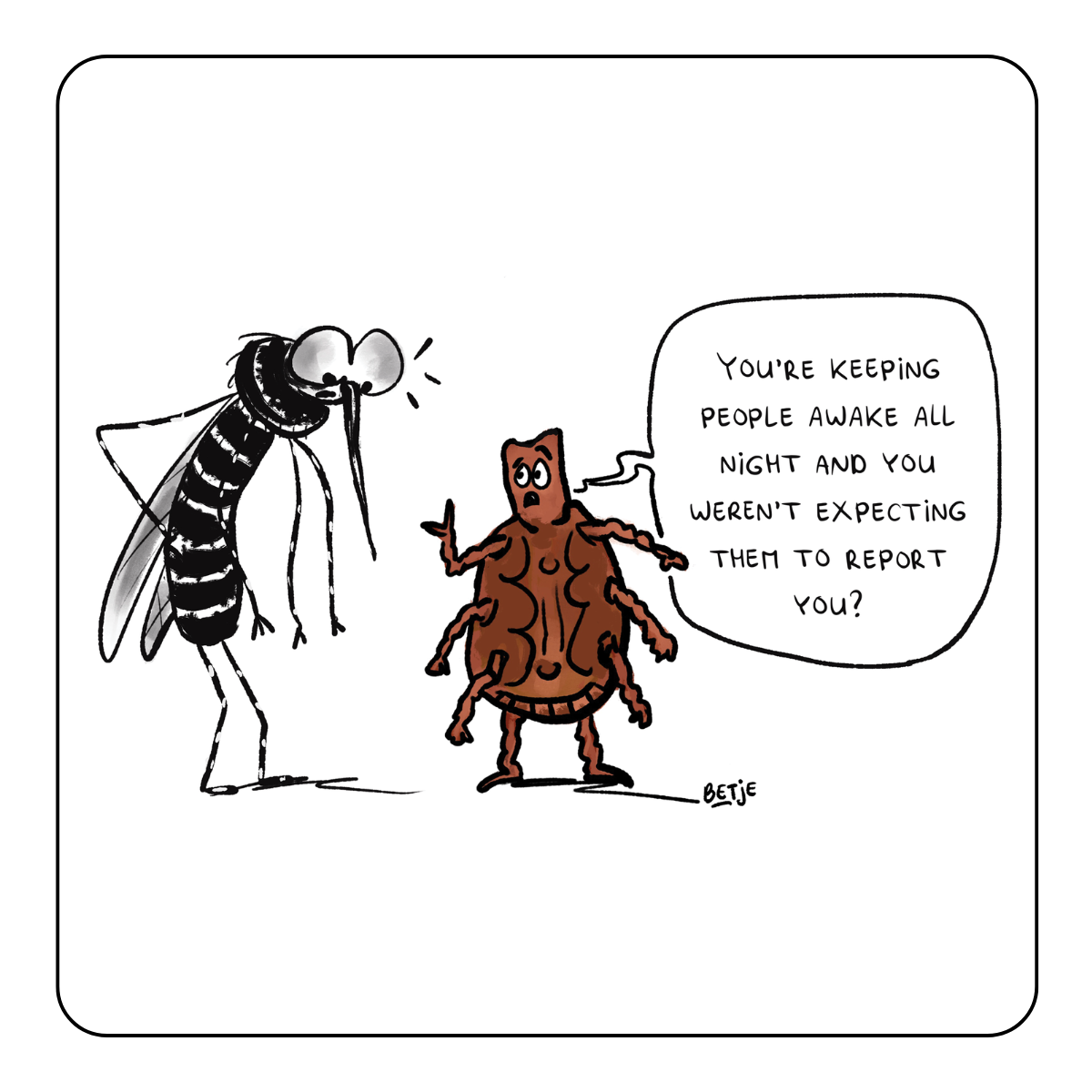
“For researchers deeply immersed in their own fields, explaining their work in plain language isn’t always easy. It can be helpful to explain it to a person who doesn’t know a lot about the subject, but does know about storytelling. I had already learned a lot about IDAlert’s work by listening in on meetings and making cartoons. By interviewing consortium members individually, I was able to understand what IDAlert is doing and explain it in my own words – making it accessible for all,” shared Betje.
What’s in the book?
The book covers the key areas of IDAlert’s work.
- Tracking insects in the wild. Researchers use smart traps with sensors and AI to identify which mosquito species are present and where. Citizens can also help: apps like Mosquito Alert and TickRapporteur let anyone submit a photo of a tick or mosquito they’ve spotted. During one Swedish campaign, people reported ticks not normally found there, including one that can carry a dangerous fever virus.
- Testing on the spot. A portable DNA lab: basically a high-tech suitcase, lets researchers identify species and pathogens in the field, without sending samples to a distant laboratory. Faster results, less risk of contamination.
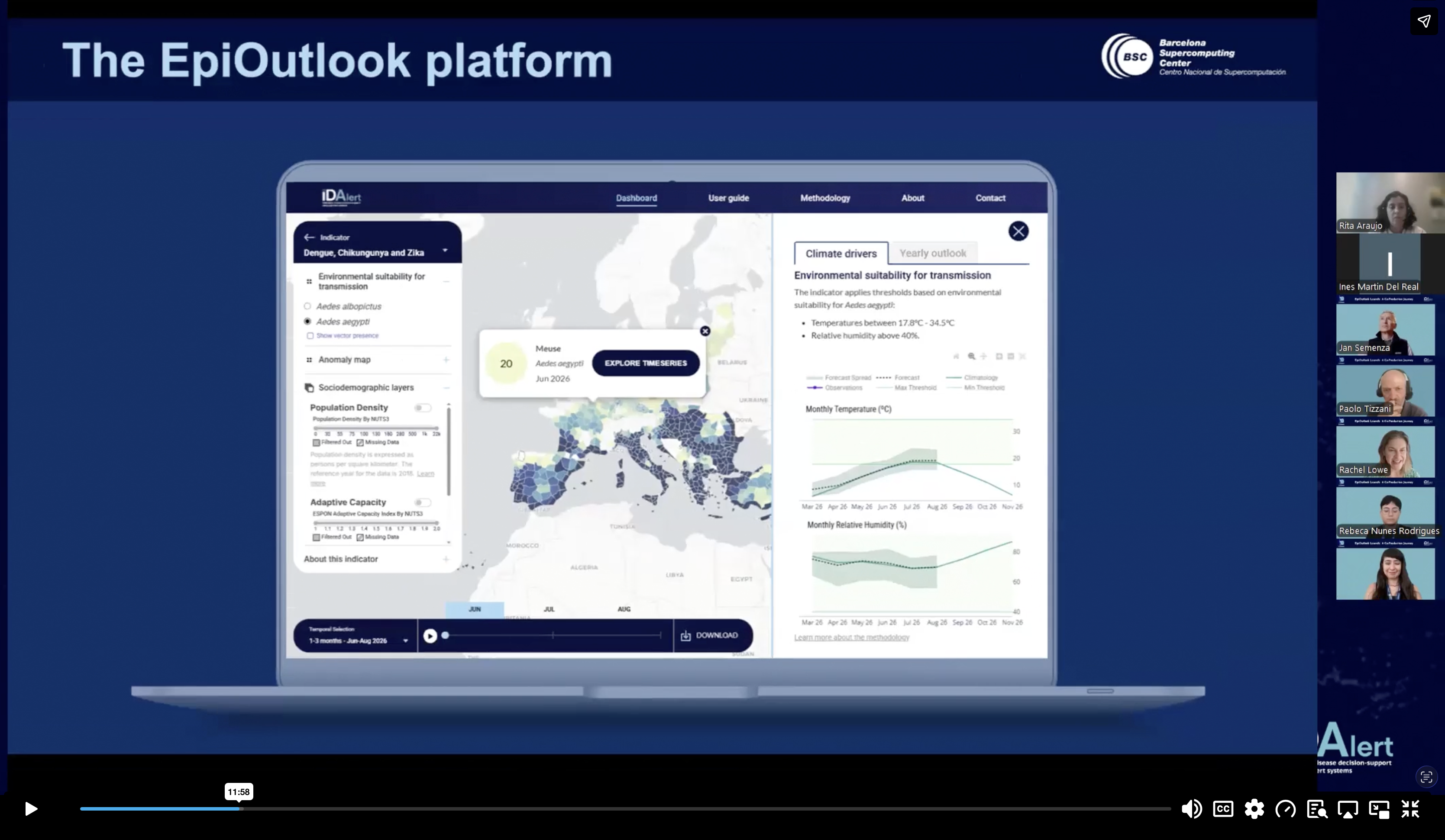
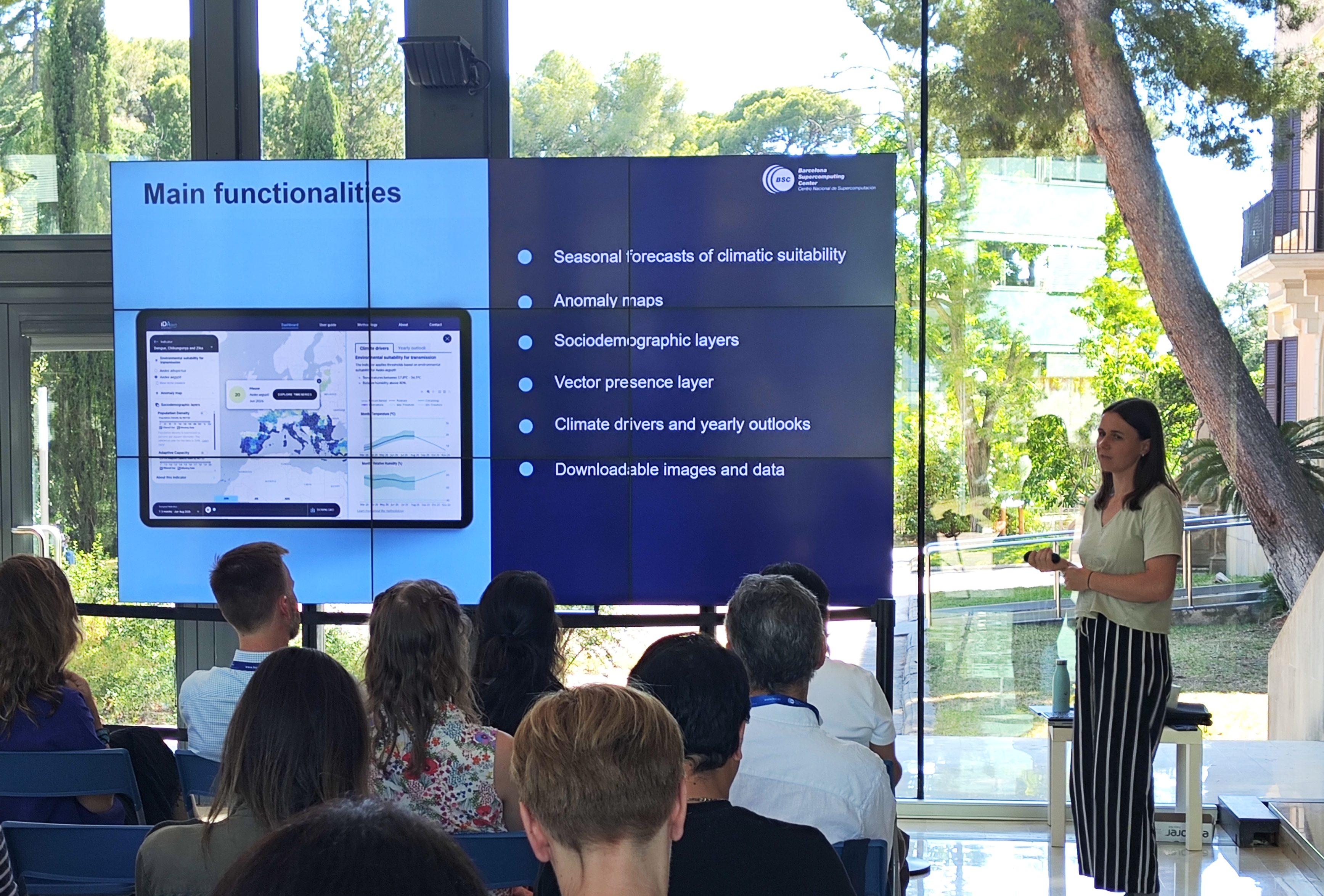
- Helping decision-makers act. IDAlert is building two open tools: a searchable library to help policymakers understand how their decisions affect disease risk, and a live dashboard called EpiOutlook that shows where in Europe conditions are becoming suitable for disease-carrying insects.
- Practical fixes that work. In Barcelona, researchers tested a simple change to street storm drains, making them drain completely so mosquitoes can’t breed in them. The result: a 94% drop in mosquitoes nearby. This idea originally came from Brazil, a reminder that countries with more experience managing these diseases have a lot to teach Europe.
Europe is warming twice as fast as the global average, and diseases that were once rare here are becoming common. The good news: with better data, smart tools, and practical interventions, we can prepare and respond effectively.
The cartoon book is our way of sharing that story with everyone.