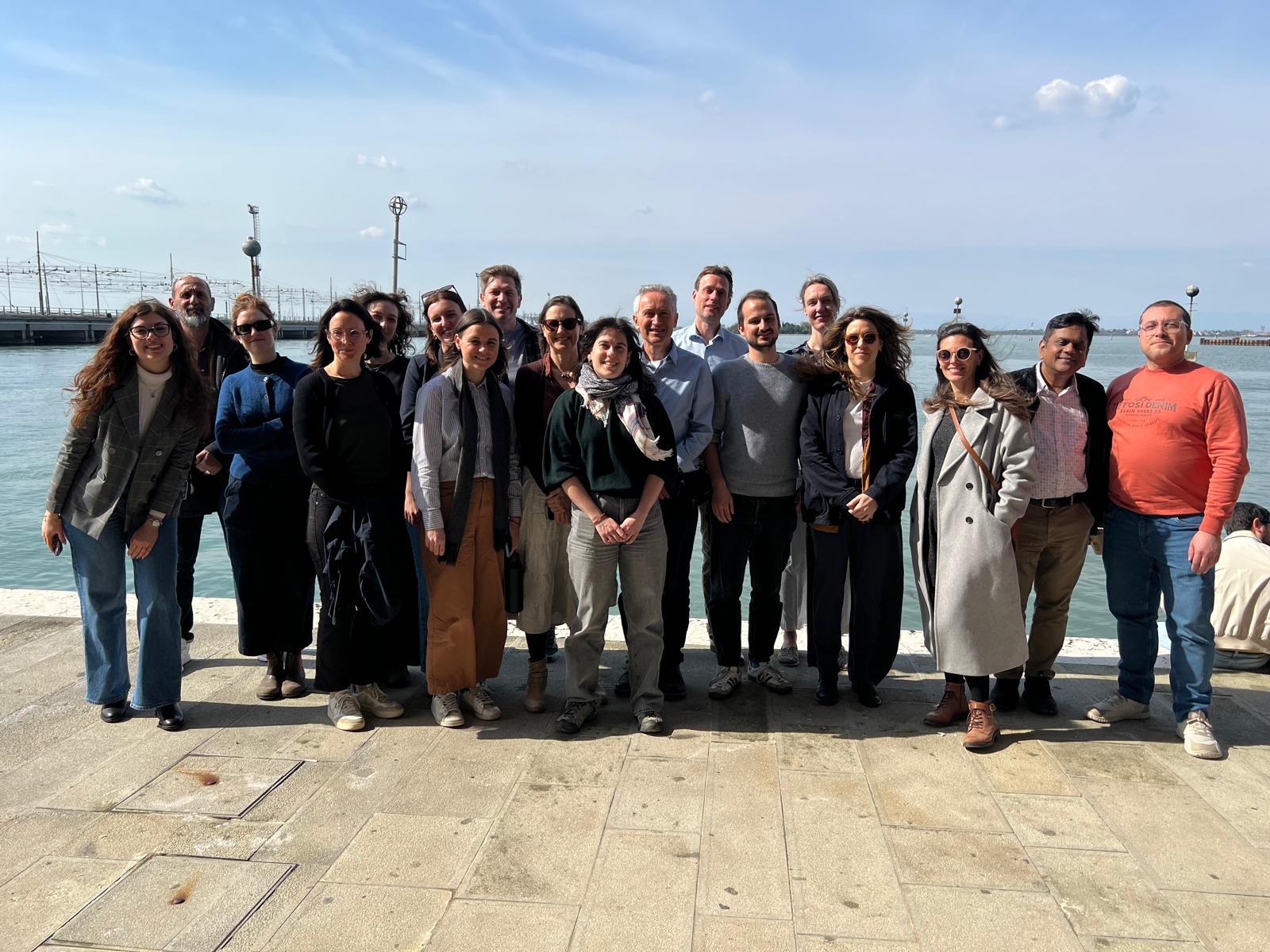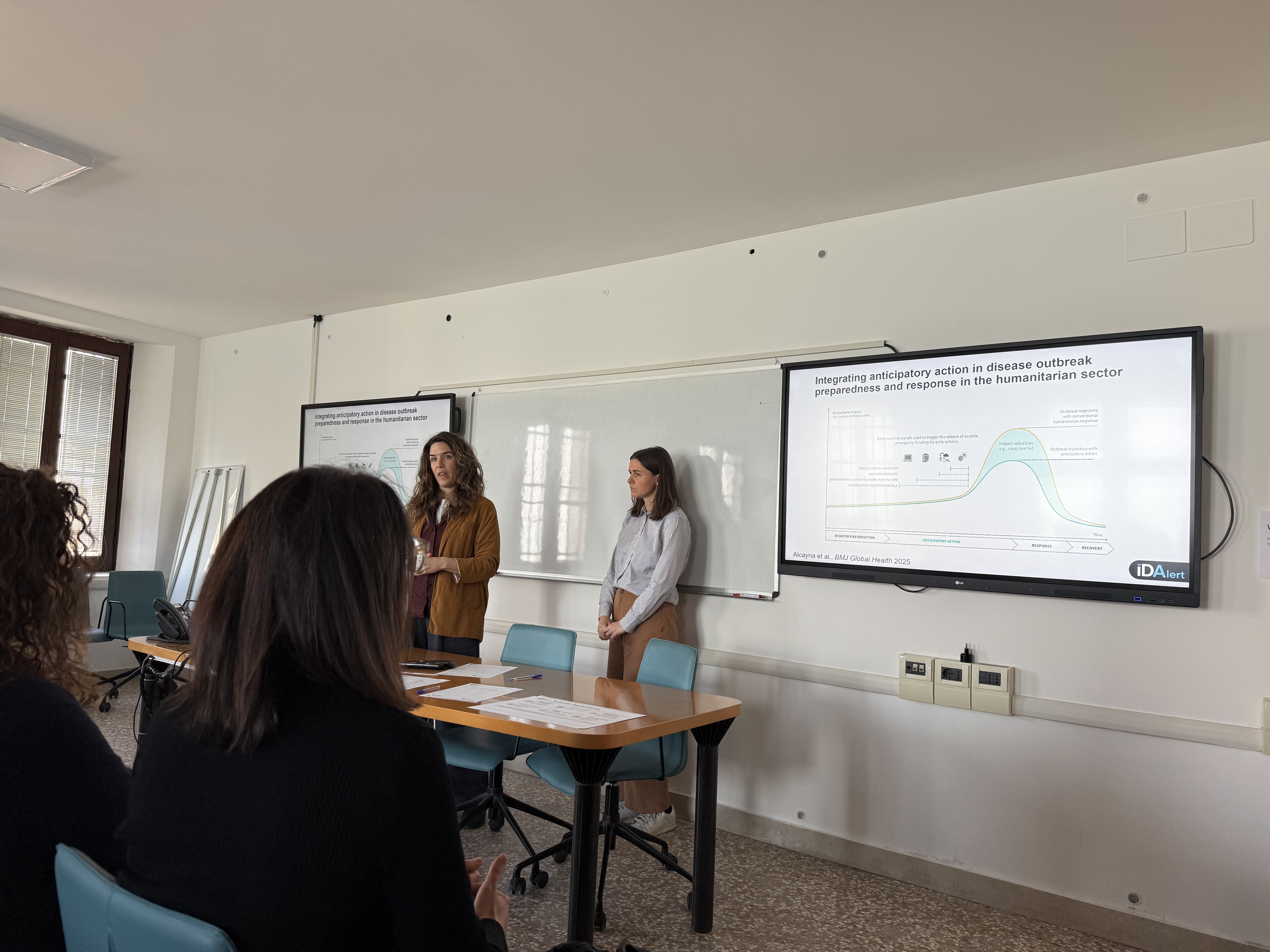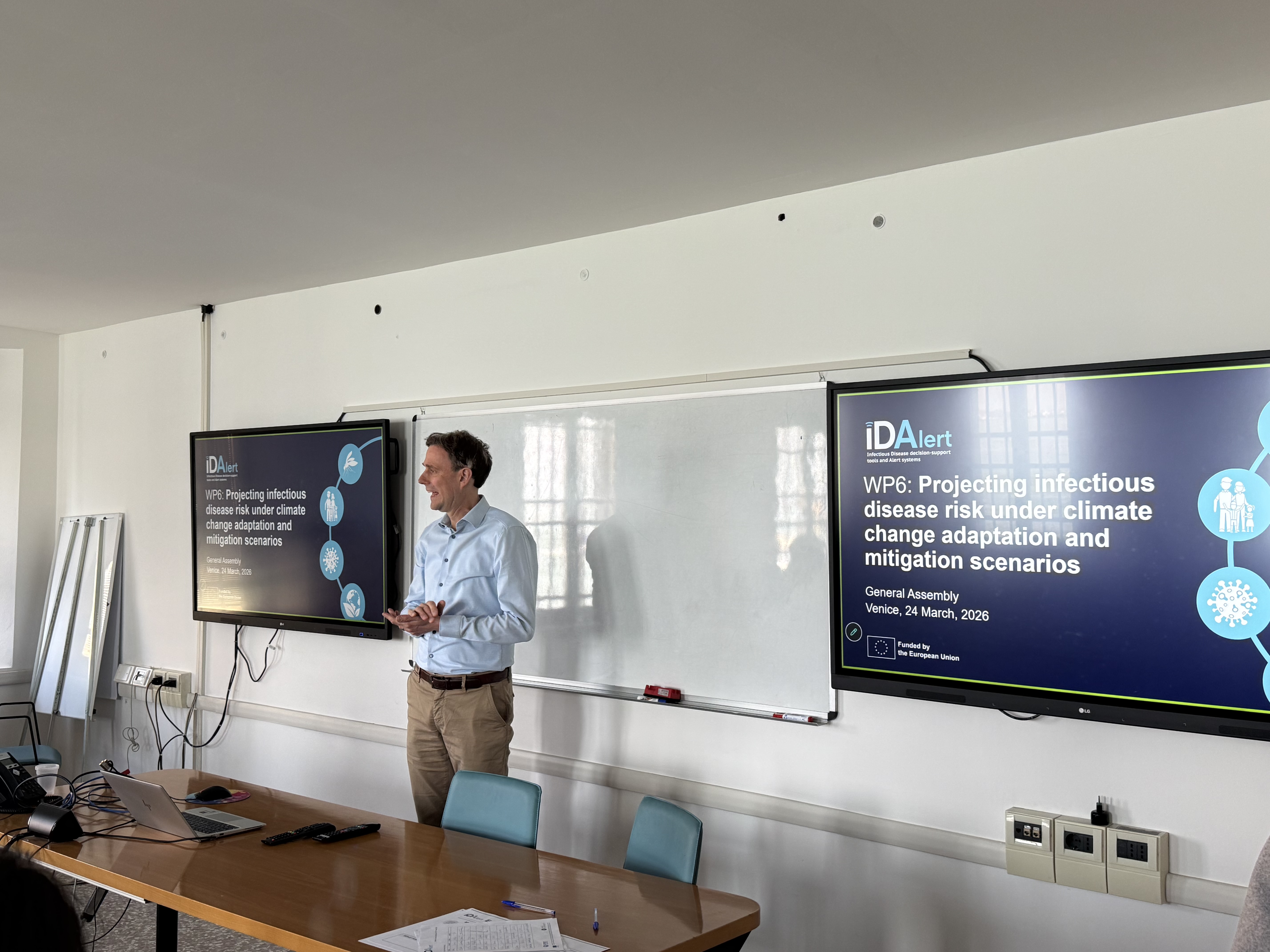

On 24–25 March 2026, partners of the IDAlert project met in Venice for the project’s fourth General Assembly, hosted by our partner CMCC. As the five-year initiative moves into its final year, the meeting marked an important transition from ongoing research towards delivery, impact, and long-term sustainability.
The General Assembly brought together consortium members to take stock of progress across work packages, align expectations for the final phase, and define priorities to ensure that the project’s outputs translate into real value for policy and public health decision-making.
From research to impact
With four years of work behind it, IDAlert is now entering a decisive stage. Discussions in Venice focused not only on advancing technical outputs, but on ensuring their usability and uptake. This includes strengthening the connection between scientific results and the needs of policymakers, public health authorities, and other stakeholders.
A key theme throughout the meeting was the shift toward outcomes that can be implementable or designed for use. Partners explored how to package and communicate results in ways that support decision-making, particularly in the context of climate-sensitive health risks.
Advancing core outputs
Particular focus was placed on the project’s core deliverables, which are expected to be completed over the coming year. These include:
- Refinement of indicators to better understand and monitor climate-related health impacts
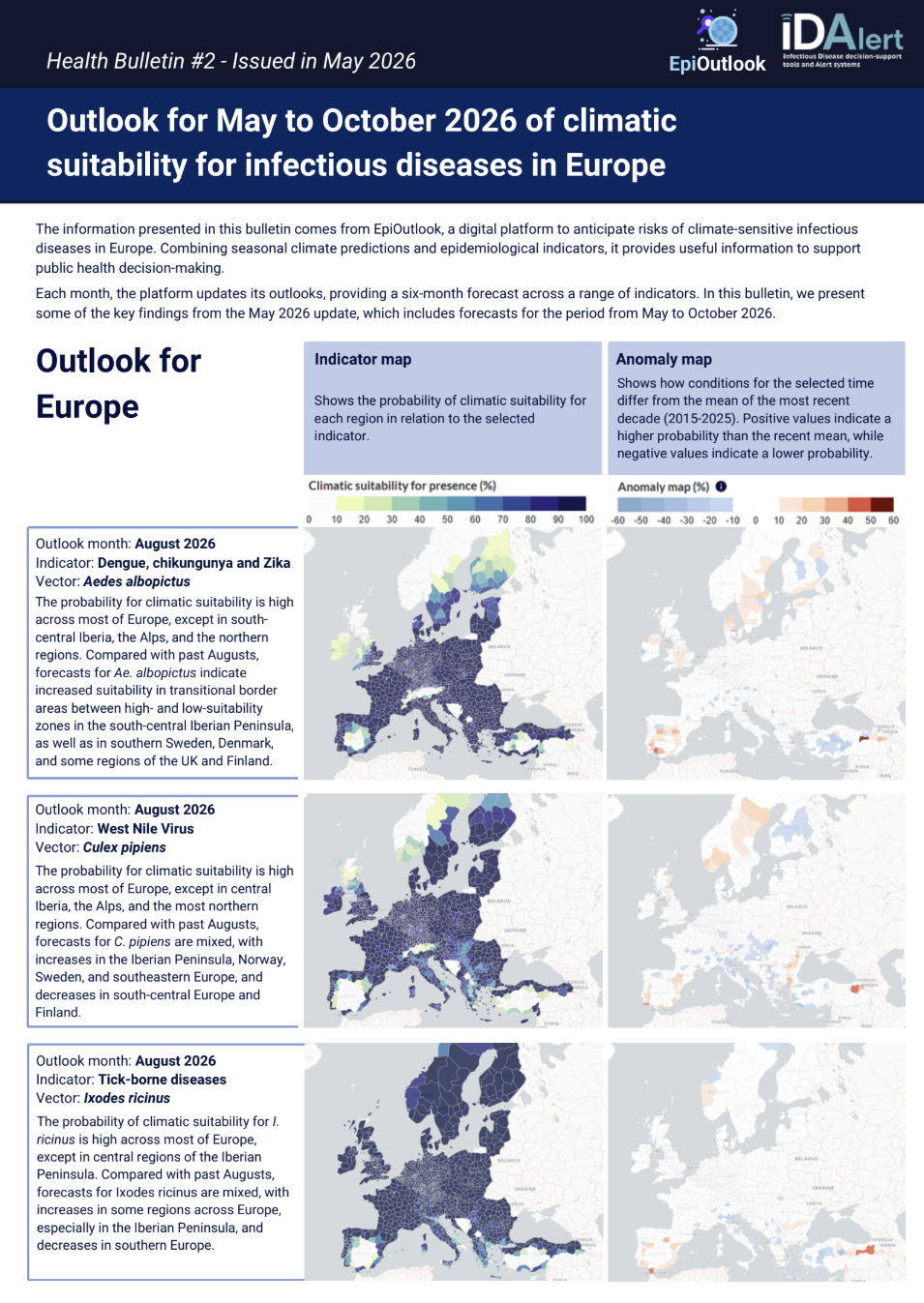
- EpiOutlook platform, designed to provide integrated insights for anticipating health risks
- A decision support tool aimed at guiding policymakers in selecting and evaluating adaptation strategies
- Projections of infectious diseases risk under future climate change scenarios to aid preparedness planning
In parallel, partners shared updates from the case studies and interventions implemented across different regions.
Building capacity and strengthening engagement
Beyond technical outputs, the consortium emphasised the importance of capacity building and continuous stakeholder engagement. Plans are underway to develop targeted materials for different audiences, including training resources, policy briefs, and communication tools tailored to decision-makers. Ensuring that these materials are accessible, relevant, and practical will be central to maximising the project’s legacy.
As IDAlert approaches its conclusion, sustainability emerged as a central priority. Discussions focused on how to maintain and extend the value of the project’s tools, platforms, and knowledge beyond the lifetime of the project.
As the project moves into its final phase, deliverables and results will be released on the IDAlert website, with updates shared regularly through LinkedIn.