New EpiOutlook bulletin highlights climate-sensitive infectious disease risks in Europe

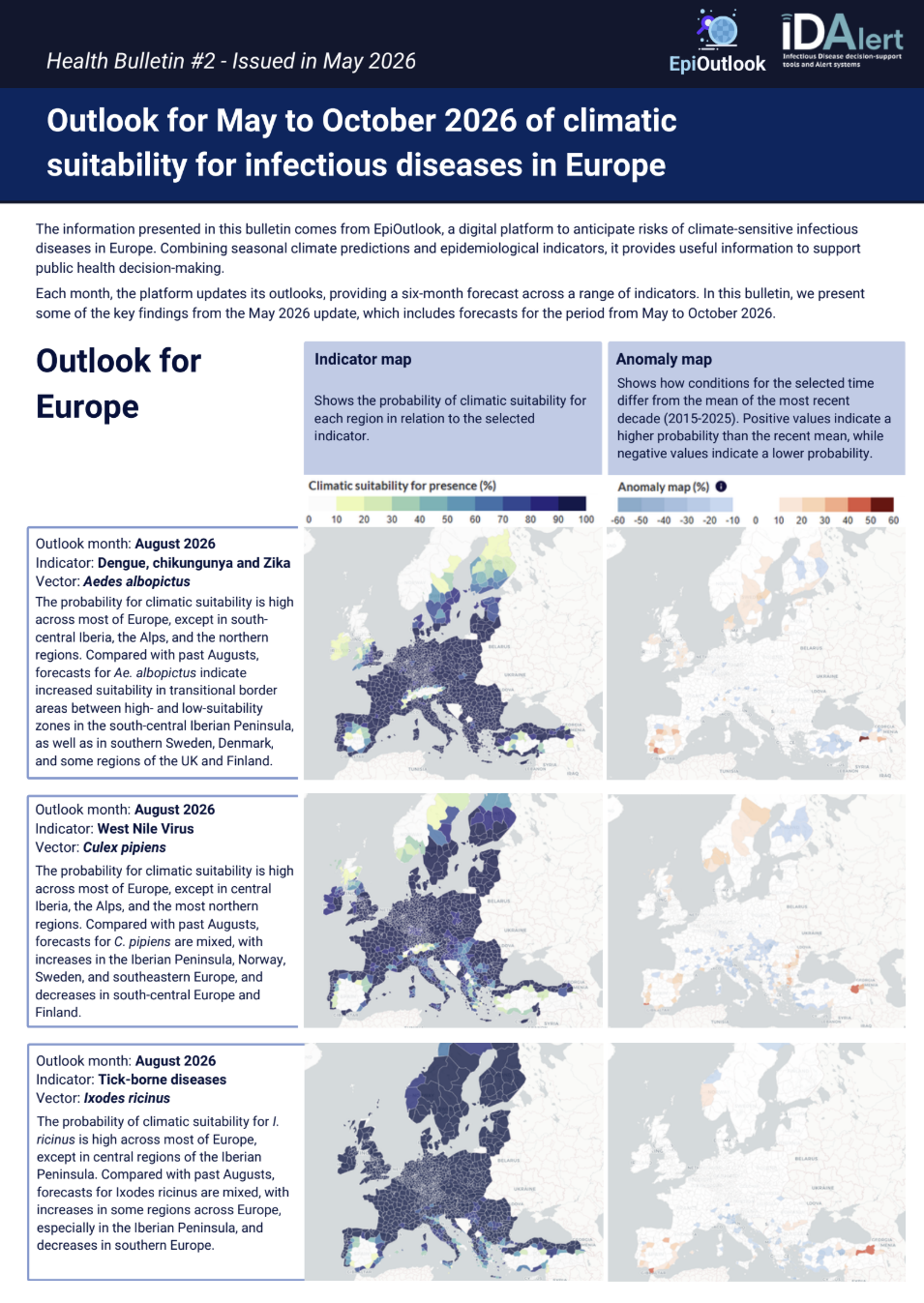
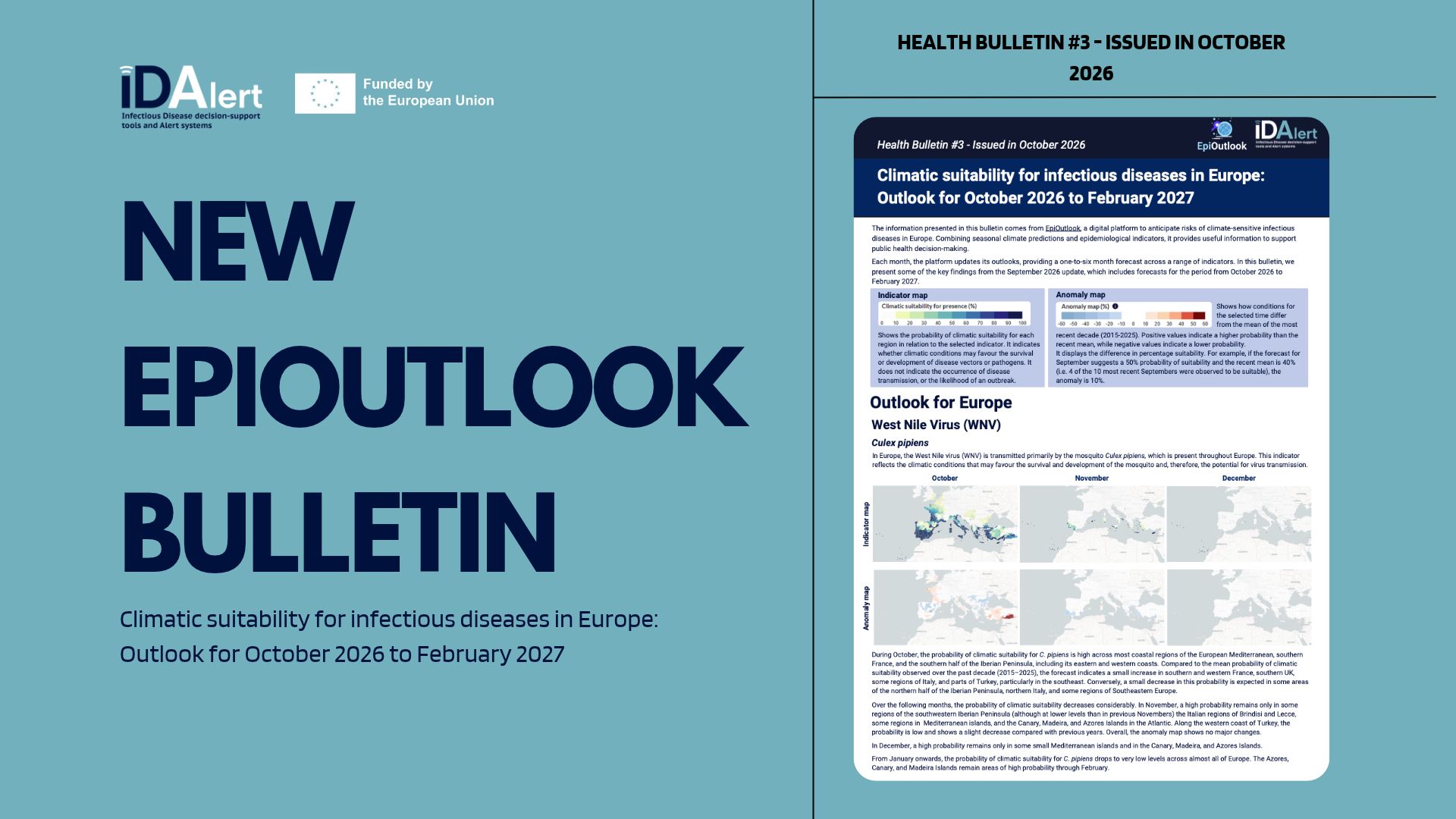
The latest EpiOutlook Health Bulletin, issued in October 2026, presents key findings from the September update on the climatic suitability for infectious diseases in Europe, with an outlook covering October 2026 to February 2027.
The bulletin shows that October remains a climatically suitable month for several mosquito- and tick-related risks across parts of southern and western Europe, before suitability generally decreases during the winter months.
For West Nile virus, suitable conditions for Culex pipiens remain high in October across many Mediterranean coastal regions, southern France and the southern Iberian Peninsula. A similar pattern is observed for the mosquitoes linked to dengue, chikungunya and Zika, with suitability concentrated mainly in southern Europe and Mediterranean and Atlantic islands before declining later in the season.
The outlook also highlights continued climatic suitability for the tick Ixodes ricinus across large parts of Europe in October, while suitability for other vectors and pathogens, including those associated with malaria, becomes much more limited from November onwards.
Importantly, these indicators reflect climatic suitability rather than actual disease transmission or outbreak probability. EpiOutlook combines seasonal climate predictions with epidemiological indicators to help identify where conditions may become more favourable for vectors and pathogens and to support public health preparedness.
EpiOutlook was developed by the Global Health Resilience group at the Barcelona Supercomputing Center – Centro Nacional de Supercomputación (BSC-CNS), in collaboration with international partners through the IDAlert project.
Download it from here!